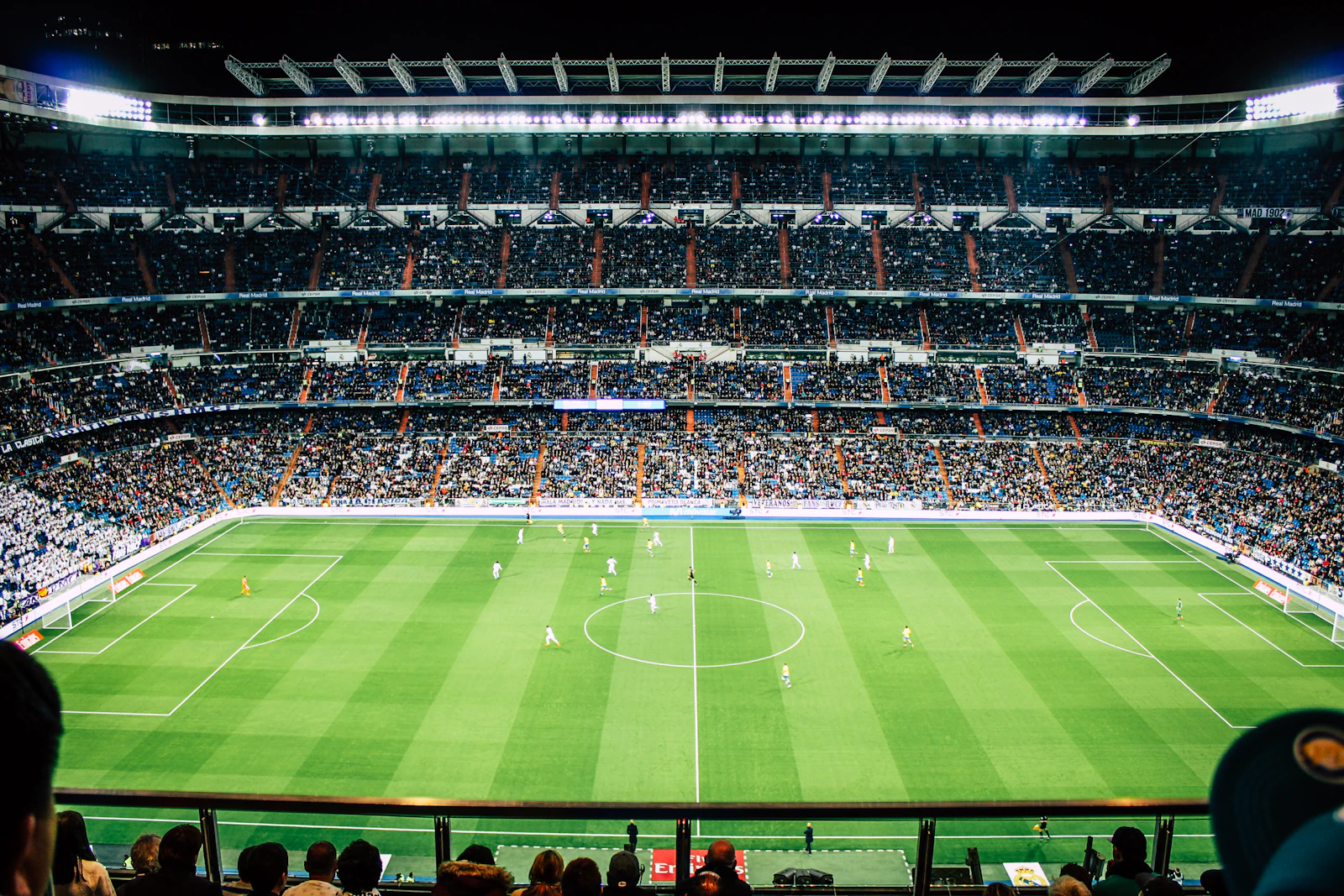
The match itself was real, and genuinely controversial. Egypt took Argentina to the wire in Atlanta on July 7 before losing 3-2 in the Round of 16, and French referee Francois Letexier made two decisions Egyptian fans will replay for a decade. A VAR review wiped out an Egyptian goal after midfielder Marwan Attia was penalized for stepping on Lisandro Martinez's foot. A disputed foul call involving Mohamed Salah preceded Argentina's go-ahead goal. Angry fans, hard calls, a heartbreaking exit. Football has processed that combination for a century. What happened next is the part with no precedent.
Within a day, screenshots were circulating that claimed Letexier was "born into an Orthodox Jewish family," offered as proof that Israeli influence had rigged the match. The line came from his Wikipedia page. The page's own edit history shows the phrase was inserted on July 8, hours after the final whistle, propped up by a citation to a French magazine article that contains no such information. Someone manufactured the evidence, screenshotted their own manufacture, and shipped it as proof. A separate post, viewed 2 million times, claimed Letexier had received "a mysterious payment of more than $500,000" in the 24 hours before the match. No authority, no bank, no news organization anywhere corroborates it. A third wave claimed he had been removed from the tournament in disgrace. He had not. FIFA's head of referees Pierluigi Collina put out a statement that "nobody can question the integrity of the FIFA World Cup match officials," which is what the record shows and which changed approximately nothing, because a denial travels on foot while a conspiracy travels on every feed at once.
A Man Got Framed With Fabricated Evidence, In Public, In Real Time
Strip away the football and look at the mechanics, because they are the story. A real person doing his job on live television became the target of a smear campaign whose supporting documents were manufactured on demand. The Wikipedia edit is the tell. This was not a rumor that got out of hand. Someone created a false biographical fact, laundered it through the most-trusted reference site on the internet, captured it before moderators could revert it, and distributed the screenshot as historical record. Euronews' fact-checking team The Cube took the claims apart on July 16: the edit history, the empty citation, the nonexistent payment, the nonexistent removal. The debunk is thorough, careful, and nine days behind the lie.
This is the pattern we documented when the top chatbots failed to identify AI-generated video 78 to 95 percent of the time, now running at tournament scale against a named human being. Generation is instant. Verification is slow, manual, and performed by a handful of exhausted professionals. Between those two speeds is where a French referee's reputation now lives.
The Stands Are Full Of Women Who Do Not Exist
That campaign against one official is the sharp end, but the whole tournament is marinating in synthetic content. European public broadcasters investigating World Cup misinformation found AI-generated videos of glamorous female fans going viral as authentic crowd footage. The biggest, an account called "Chiara Cleo" posing as a Brazilian supporter, drew 40 million views on its most-shared clip and holds over 340,000 Instagram followers, most of whom believe they are following a person. The account links out to adult content platforms, because the fake fan is a sales funnel wearing a jersey. Belgian broadcaster VRT identified additional fabricated Belgian, German, and Paraguayan fans built on the same template. The crowd shots are the product. The tournament is just the lighting rig.
Then there is the photo of a spectator resembling Adolf Hitler at Germany's match against Curacao, which pulled millions of views across multiple languages. Investigators comparing it against actual broadcast footage found it was an altered version of a real image, and the file carried an OpenAI watermark, meaning it was modified with the company's own tools. Even players got synthetic biographies: false stories exaggerated Cape Verde goalkeeper Vozinha's backstory, claiming he worked as an electrician or a bus driver, when he has played professionally in Portugal's second division across a senior career approaching twenty years. A wholesome lie is still a lie, and it crowded out the man's actual life while borrowing details from a teammate who genuinely was recruited through LinkedIn.
Seven Newsrooms Against Infinite Content
People are pushing back, and they deserve naming: fact-checkers at DW, RTVE, ZDFheute, RTBF, VRT, RTE, and Franceinfo have been running coordinated verification through the tournament, using AI detection tools and frame-by-frame comparison against broadcast footage. They are good at it. They are also seven newsrooms staring at a firehose, doing artisanal debunking of industrial-scale fabrication. Every fake they kill took minutes to make and hours to disprove, and the account that posted it faces no consequence beyond posting again.
The World Cup is the most-watched event on the planet, wired with more cameras than any place on earth, and it still cannot outrun a fake. If the truth loses the information war here, with a billion witnesses, imagine how it goes where nobody is watching.
For the AI industry, the uncomfortable part is that this ecosystem is its product working as designed. The image tools altered the Hitler photo. The video tools built the fake fans. The chatbots people use to check suspicious content wave fakes through as real most of the time, and the same synthetic slop is already feeding back into training data, a loop researchers politely call data poisoning. Every layer of the stack, generation, distribution, and verification, fails in the direction of the fabricator. The referee smear needed no advanced technology at all, just a Wikipedia edit and a screenshot, and it outran FIFA's official denial by a week. Add industrial image generation on top and you get a tournament where the question "did that actually happen" has stopped having a reflexive answer.
This Is The New Home Game
World Cup 2026 will produce a champion, and it has already produced a preview of every future public event: a parallel tournament of synthetic people, synthetic evidence, and synthetic grievances, played out on top of the real one, with real casualties. Francois Letexier will referee again. The 340,000 people following a woman who does not exist will keep scrolling. And the next time a call goes against a team with passionate fans, the machinery that framed a referee in a day will already be warm. For the wider pattern of AI systems failing exactly where people trust them most, see our running timeline of AI failures and the full catalog of documented problems.
The Verdict
The World Cup's misinformation crisis is not about one fake image. It is a working demonstration that fabricated evidence now moves faster than any institution that corrects it. A referee was framed with a doctored Wikipedia page and an invented payment, AI fan influencers harvested 40 million views, a Hitler hoax shipped with an OpenAI watermark, and seven newsrooms of fact-checkers are mopping an ocean. The tools that make the fakes are industrial. The tools that catch them are handmade.