AI Hallucination Sanctions Mount for Lawyers in 2026
No retrievable document, filing, study or publication is named anywhere in this report. It is kept available for source recovery but is excluded from search indexing, from the databases, from the homepage modules and from every sourced-report count until a source is attached and verified.
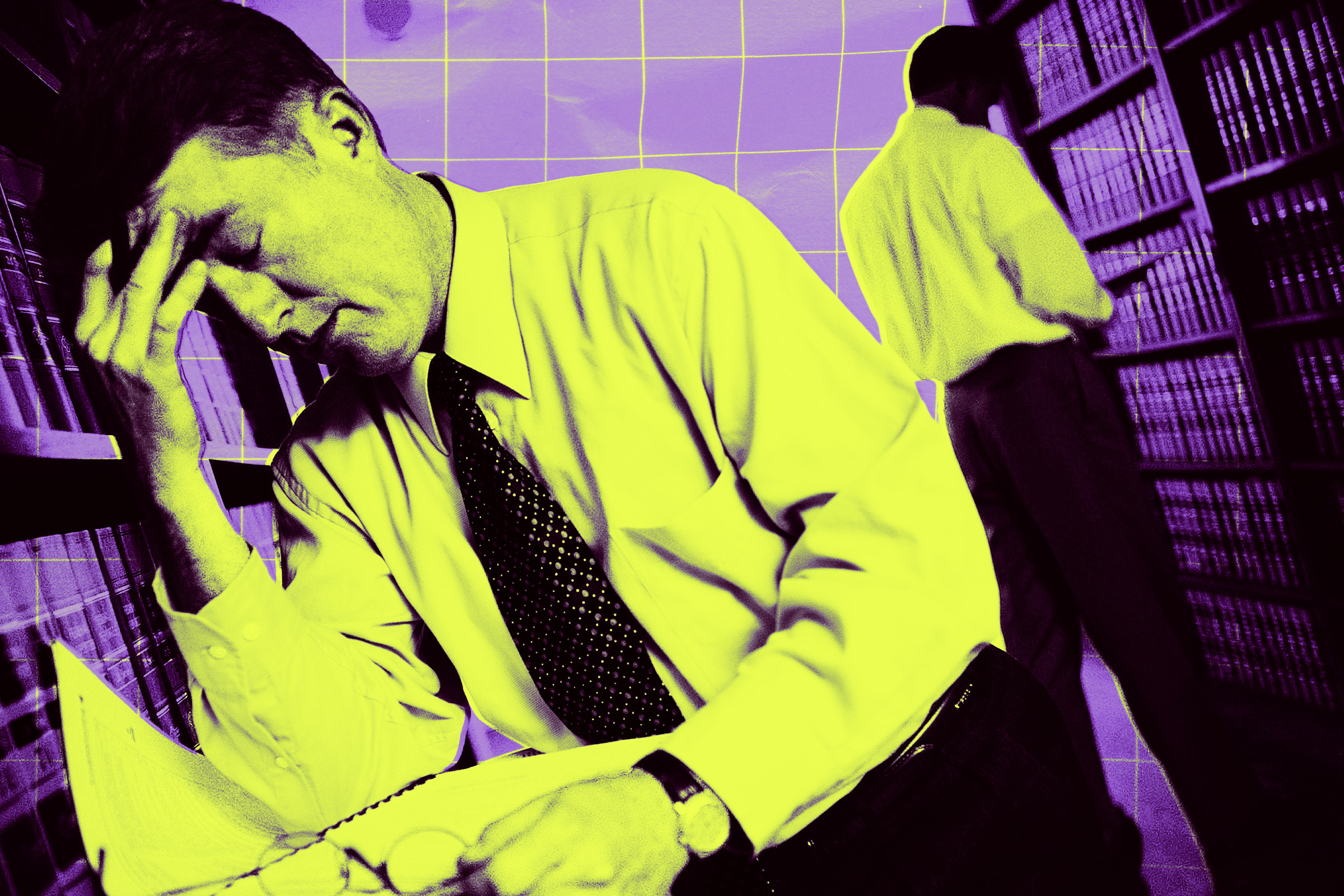
Courts across the country are running out of patience with lawyers who file briefs full of AI invented cases.
The Sanctions Era Has Arrived for AI Hallucinated Legal Citations
For two years, the legal profession treated AI hallucinated citations as an embarrassing edge case, the kind of mistake that happened to careless solo practitioners who did not know any better. That framing is now dead. A wave of new sanctions, fines, and reputational damage has made it clear that filing fabricated, AI generated case law is not a fluke. It is a structural risk that has spread from small claims courts all the way up to appeals panels and the kind of marquee law firms that bill four figures an hour.
The latest evidence arrived in rapid succession. A United States appeals court ordered a lawyer to pay $2,500 over AI hallucinations baked into a brief. In a separate matter, AI hallucinations cost lawyers $110,000 in an Oregon vineyard lawsuit. And in perhaps the most jarring development of all, AI hallucinations turned up in a filing tied to a high-profile Wall Street law firm, the kind of institution that exists precisely because clients pay a premium to avoid these mistakes.
Taken together, these are not three isolated stumbles. They are a pattern, and the pattern points in one direction: the courts have decided that the novelty excuse has expired. Lawyers who lean on generative AI without verifying its output are now finding out exactly what that shortcut costs, and the bill is arriving in dollars, in lost cases, and in damaged careers.
An Appeals Court Puts a Price Tag on Fabricated Citations
The $2,500 sanction from a United States appeals court matters far more than the dollar figure suggests. Appeals courts sit above trial courts in the judicial hierarchy, and their rulings carry weight as guidance for every lawyer practicing beneath them. When an appellate panel decides to fine an attorney for AI hallucinations in a brief, it is sending a message that travels well beyond the parties in that single case.
The fine itself is modest by the standards of legal billing. But sanctions of this kind are rarely about the money. They are about the record. A monetary sanction tied to AI hallucinated citations becomes part of an attorney's professional history, the sort of thing opposing counsel can raise, that bar associations can note, and that clients can find. For a profession built on credibility, a documented finding that you submitted fake cases to a federal appeals court is a far heavier penalty than the $2,500 line item.
Why an Appeals Court Sanction Cuts Deeper
Trial court sanctions can be written off as one judge having a bad day. An appeals court sanction is harder to dismiss. It signals that the judiciary's higher tiers now treat AI hallucinated filings as sanctionable conduct rather than honest error, and that signal cascades down to every lawyer who might be tempted to file an unverified AI brief.
The $110,000 Vineyard Lawsuit: When the Client Pays for the Machine's Mistakes
If the appeals court fine illustrates the reputational stakes, the Oregon vineyard lawsuit illustrates the raw financial ones. AI hallucinations cost lawyers $110,000 in that case, a figure that dwarfs the typical sanction and lands squarely in the territory of real economic harm.
The number is significant because it reframes the entire conversation. A few thousand dollars in court fines can be absorbed as a cost of doing business. A six-figure loss cannot. When hallucinated citations contribute to an outcome that expensive, the calculus changes for every firm watching. Malpractice exposure, fee disputes, and the prospect of clients demanding refunds or filing complaints all enter the picture. The vineyard case demonstrates that the downstream cost of trusting an AI tool's output without verification can vastly exceed whatever time the tool was supposed to save.
There is a grim irony embedded in these numbers. Generative AI was sold to the legal industry as an efficiency engine, a way to draft faster and research cheaper. The vineyard lawsuit shows the opposite outcome. The technology that promised to save billable hours instead generated a $110,000 problem, and the people who pay for that failure are not the chatbots. They are the lawyers and, ultimately, the clients who trusted them.

A six-figure loss reframes AI hallucinations from an embarrassment into a measurable financial liability.
The Wall Street Firm Problem: Prestige Is No Longer a Shield
The most unsettling story in this cluster is the discovery of AI hallucinations in a filing connected to a high-profile Wall Street law firm. For most of the past two years, the comforting assumption inside the profession was that fabricated AI citations were a problem of the under-resourced and the inexperienced. Big firms, the thinking went, had the associates, the partners, the review layers, and the institutional discipline to catch fake cases before they reached a judge.
That assumption no longer holds. When hallucinated material surfaces in a filing tied to an elite Wall Street firm, it punctures the idea that money and prestige insulate a practice from the failure mode. If a firm at the top of the legal food chain can file a document containing cases that do not exist, then the problem is not about resources or talent. It is about process. Specifically, it is about whether anyone in the chain of review actually checked the AI's work against the real body of case law before signing off.
The implication for clients is direct. Paying premium rates does not guarantee immunity from AI hallucinated filings. It guarantees only that the mistake, when it happens, will be more visible and more expensive. The episode should force every firm, regardless of size or reputation, to ask whether their internal controls have kept pace with the tools their attorneys are quietly using.
How the Failure Happens, and Why It Keeps Happening
The mechanism behind these disasters is consistent, and understanding it explains why prestige and price tags offer no protection. Generative AI models do not retrieve case law from a database. They predict plausible text. When a lawyer asks for cases supporting a legal argument, the model produces citations that look exactly like real ones, with realistic party names, plausible reporter volumes, and confident summaries, regardless of whether those cases ever existed.
The danger is that the output is fluent and authoritative. A hallucinated citation does not arrive with a warning label. It looks identical to a genuine one, which is precisely why busy attorneys drop it into a brief without checking. The model is not lying in any intentional sense. It is doing what it was built to do, which is generate convincing language, and convincing language is not the same thing as accurate law.
- Fluency masquerading as accuracy. Fabricated cases read like real precedent, so they survive a casual skim that a wrong-looking citation never would.
- Verification gets skipped. The entire appeal of the tool is speed, and verifying every citation against a legal database erases the time savings, so under deadline pressure the check gets dropped.
- Trust accumulates dangerously. A lawyer who uses AI successfully for low-stakes drafting starts trusting it for high-stakes research, right up until the day a phantom case lands in a filed brief.
- Review layers assume someone else checked. In larger firms, the diffusion of responsibility means a partner assumes the associate verified the cases and the associate assumes the partner will catch any errors.
None of these failure points are exotic. They are the ordinary frictions of legal work colliding with a tool that is confidently, fluently wrong. That is why the sanctions keep coming, and why no amount of firm prestige has stopped them.
The Professional Fallout Is Just Getting Started
What makes this moment different from the early AI hallucination cases is the trajectory. The penalties are escalating, the institutions involved are getting more prestigious, and the financial stakes are climbing from symbolic fines into six-figure losses. Each new sanction lowers the bar for the next judge to impose one, because precedent is exactly how the legal system decides what counts as acceptable conduct.
For the broader AI accountability story, the legal profession is functioning as a uniquely public stress test. Unlike most industries, where AI failures happen behind closed doors, the courts produce a written record. Every sanctioned brief, every hallucinated citation, every six-figure loss becomes a documented, citable event. That paper trail is turning the legal sector into the clearest available case study of what happens when professionals trust generative AI output without verifying it.
The takeaway for any lawyer reading the headlines is blunt. The grace period is over. Courts have stopped treating AI hallucinations as understandable errors from people adjusting to new technology, and have started treating them as sanctionable failures of professional diligence. The $2,500 fine, the $110,000 loss, and the Wall Street firm caught with fake cases are not the end of this story. They are the early entries in a ledger that is still being written, one sanctioned filing at a time.
The Courts Are Documenting Every AI Hallucination
From sanctioned briefs to fabricated case law, the legal record is becoming the clearest public archive of generative AI failures.
Lawyers Sanctioned Over AI Fabricated Cases Worldwide AI Hallucinations Hub